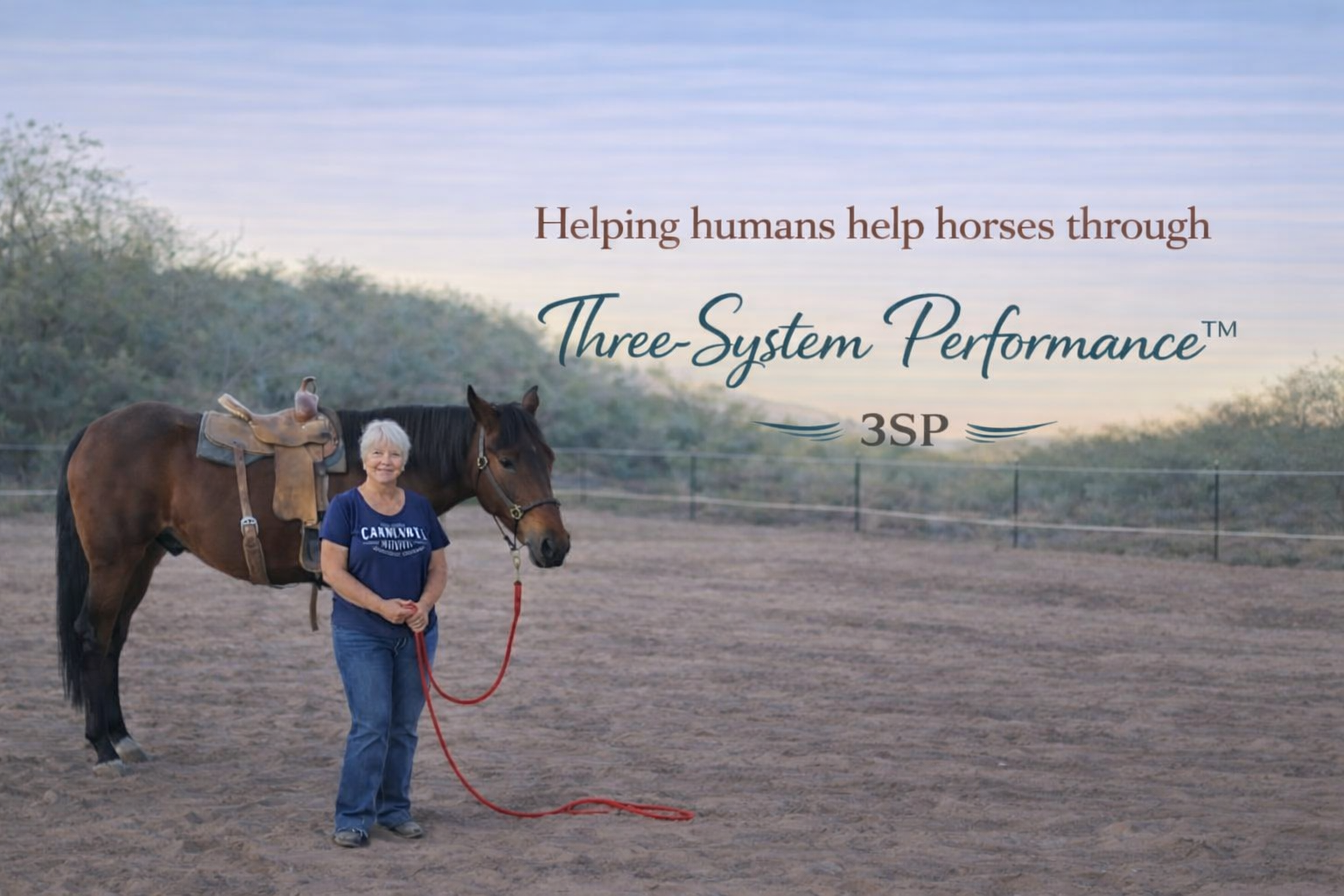
Work With Leslie
Three-System Performance is designed for riders who want to develop performance horses through structure, observation, and thoughtful conditioning.
My work focuses on helping riders understand how physiology, nervous system regulation, and conditioning interact to influence performance.
I work best with riders who are willing to build before they push.
How I Work With Riders
Support is offered through consultations and structured guidance designed to help riders apply the Three-System Performance framework to their own horses.
This work focuses on helping riders:
• understand the three performance systems
• recognize early warning signs of imbalance
• structure conditioning appropriately for their horse
• maintain nervous system regulation during development
• build durability and long-term soundness
Consultation Areas
Examples of topics we may explore together include:
Performance Conditioning
Developing conditioning programs that support the physical demands of your discipline.
Nervous System Regulation
Understanding signs of tension, anticipation, and dysregulation, and adjusting conditioning accordingly.
Early Warning Signs
Recognizing small indicators that physiology, neurology, or conditioning may be out of balance.
Performance Readiness
Understanding when a horse is physically and mentally prepared for increased intensity.
Who This Work Is For
Three-System Performance is best suited for riders who:
• compete or plan to compete
• want to develop durable, mentally steady performance horses
• value observation and thoughtful conditioning
• are willing to build fitness and regulation before asking for speed
What This Work Is Not
Three-System Performance does not replace discipline-specific training.
I do not teach barrel drills, roping techniques, or event-specific riding methods.
Instead, the focus is on helping riders develop the systems that make good training possible.
EPM & Neurological Performance Support
Some horses begin to show subtle changes long before a clear diagnosis is made.
These signs are often dismissed as training issues, personality changes, or minor physical problems.
I’ve put together a checklist of early patterns I look for when evaluating possible neurological stress, including cases often associated with EPM.
If you’re seeing multiple signs and aren’t sure what they mean together, this checklist will help you start connecting the dots.
If your horse is showing multiple signs on this list, it’s important to look at the full picture rather than isolated symptoms.
This checklist is intended as a starting point for observation, not a diagnosis.
Get Started
If this approach aligns with how you want to develop your horse, I can help you apply it.